Sugarcane
Tall perennial grass used for sugar production.

Vis M · CC BY-SA 4.0
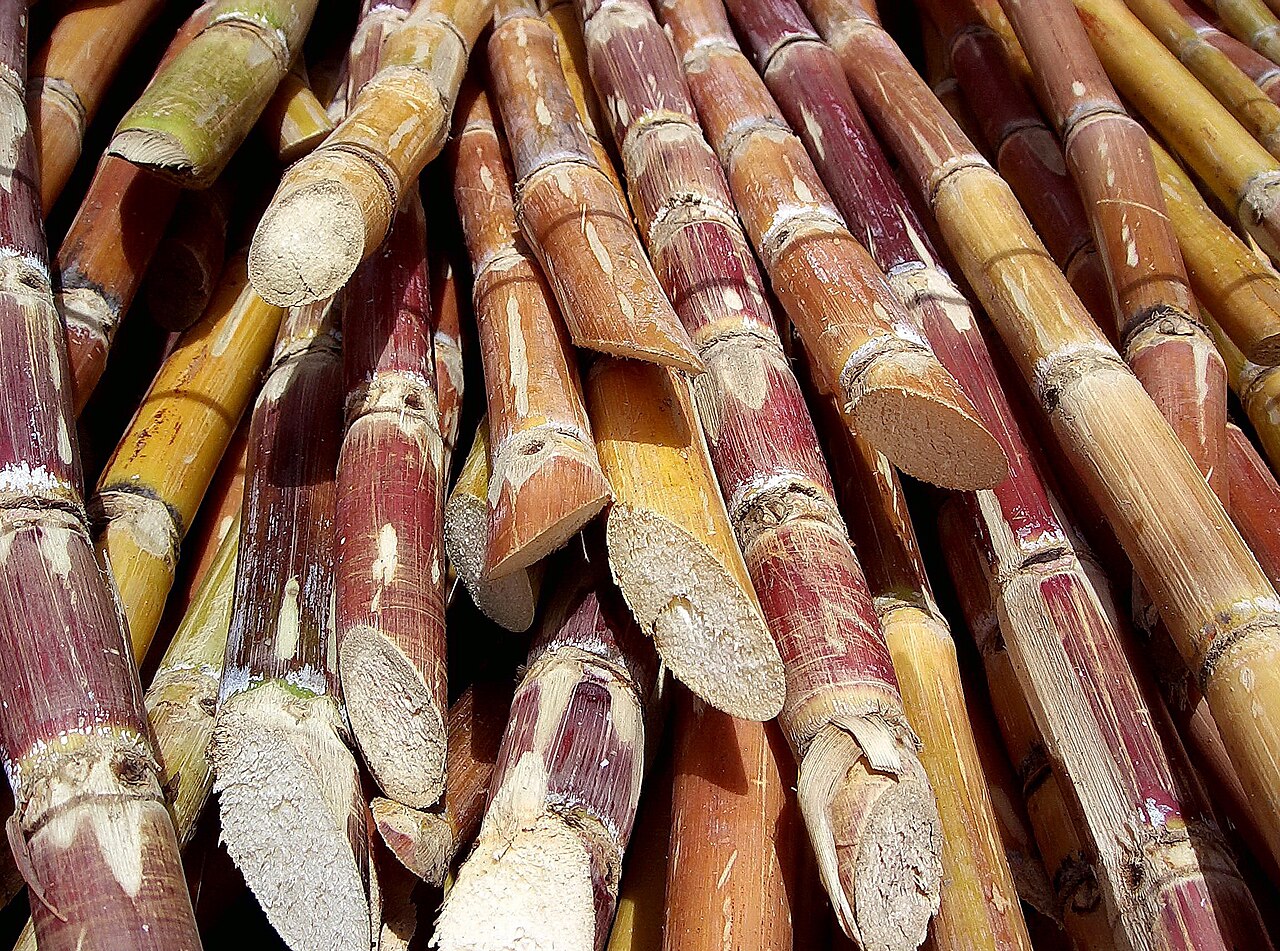
Sugarcane is a species of tall, perennial grass in the genus Saccharum, tribe Andropogoneae, used for sugar production. It is native to New Guinea and was an ancient crop of the Papuan people, later spreading globally through trade and migration.
- type
- Perennial grass
- family
- Poaceae
- native_region
- New Guinea
- major_producer
- Brazil (40% of world total)
- global_production_2020
- 1.9 billion tonnes
- sugar_share
- 79% of global sugar produced
- height_range
- 2–7 m (6–20 ft)
Lore & Background
Sugarcane was domesticated in two centers: Saccharum officinarum by Papuans in New Guinea and Saccharum sinense in mainland Southeast Asia or southern China. It was introduced to Polynesia and Island Melanesia in prehistoric times via Austronesian sailors, and reached Madagascar later through Indian Ocean trade routes. The Persians and Greeks encountered it between the sixth and fourth centuries BC, describing it as 'reeds in India yield honey without bees.' By the eighth century, sugar was a luxurious spice from India, spread across the Mediterranean and North Africa by merchants. In the 18th century, sugarcane plantations began in the Caribbean, South America, Indian Ocean, and Pacific islands, driving large migrations of laborers, some indentured and others enslaved.
Reader's Guide
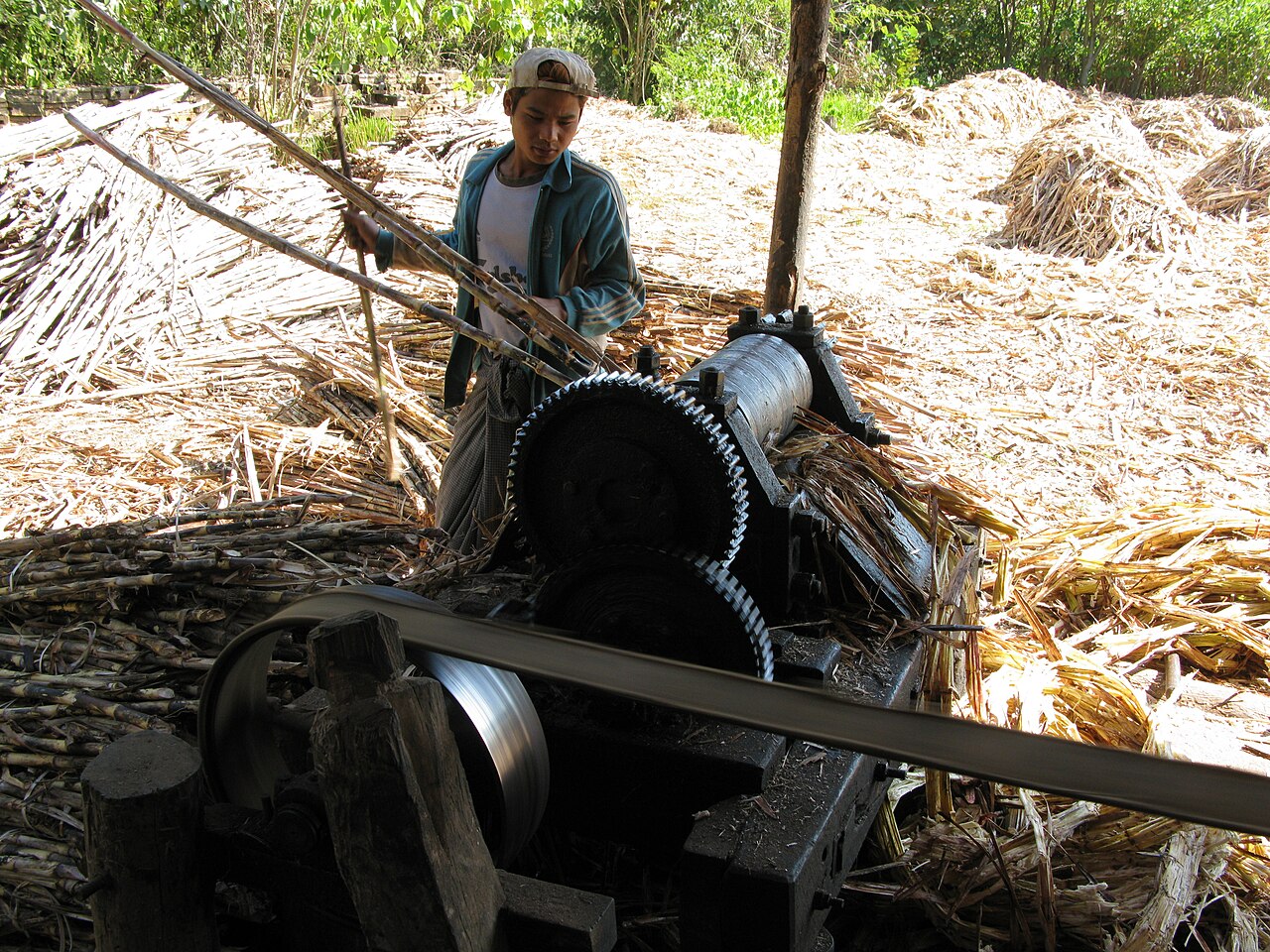
It accounts for 79% of sugar produced globally, with most of the rest from sugar beets. The crop is grown in tropical and subtropical regions, and its cultivation requires careful management of climate, soil, variety, and harvest timing. Sugarcane has a complex genome due to interspecific hybridization and polyploidization. Historically, sugarcane was central to the Atlantic slave trade, as plantations in the Caribbean and Americas relied on enslaved labor. Today, sugarcane is used not only for sugar but also for livestock fodder, and its byproducts include pens, mats, screens, and thatch. The young flower head of Saccharum edule is eaten in Southeast Asia and Oceania.
Did You Know?
- Sugarcane is native to New Guinea and was first domesticated there by Papuans.
- The term 'sugar' derives from Sanskrit शर्करा (śárkarā), which became 'sukkar' in Arabic and 'sucre' in French.
- Sugarcane accounts for 79% of sugar produced globally, with most of the rest from sugar beets.
- The sugarcane genome is one of the most complex plant genomes known, due to interspecific hybridization and polyploidization.
The World's Largest Crop by Volume
Sugarcane stands as the single most produced primary crop on Earth. In 2023, it accounted for a full 20 percent of all global primary crop output, yielding an estimated 2.0 billion tonnes — a figure that places it well ahead of maize at 1.2 billion tonnes, and wheat and rice at 0.8 billion tonnes each. Together, these four crops represent roughly half of everything the world harvests as a primary crop, making sugarcane not merely a participant but the leading contributor to that half. Sugar crops as a category represented 23 percent of total global production volume in 2023, the second-largest group behind cereals at 32 percent. This dominance is remarkable when set against the broader picture: of an estimated 50,000 edible plant species, only about 300 have ever been domesticated into crops, and 90 percent of the world's cropland is devoted to just fifteen species. Sugarcane's position at the very top of that narrow list underscores its extraordinary importance in the global food and industrial system.
Energy, Trade, and Economic Weight
Beyond sheer tonnage, sugarcane plays a measurable role in feeding the planet and moving through international markets. Sugar crops contributed 8 percent of the global dietary energy supply in 2023, a time when the average person consumed more than 3,000 kilocalories per day. While cereals dominated dietary energy at 42 percent and oil crops followed at 13 percent, sugarcane's share reflects its deep integration into daily nutrition worldwide. On the trade front, 34 percent of all sugar produced is exported across borders, making it one of the most internationally traded crop categories alongside oil crops at 46 percent and legumes at 26 percent. Economically, the picture is nuanced: although sugar crops rank second in production volume, they account for only 3 percent of the total value of primary crop production in 2023, compared to cereals at 29 percent and vegetables at 19 percent. This gap between volume and value highlights that sugarcane's economic significance lies less in per-unit price and more in its massive scale and its role as a feedstock for a wide range of downstream products.
Cultivation Systems and Agricultural Context
Sugarcane does not exist in isolation within agricultural practice; it fits into a wide spectrum of cropping methods, each carrying distinct trade-offs. In monoculture systems, a single species occupies a field for a season, typical of mechanically planted row crops, while monocropping extends that single-species approach year after year on the same plot. Crop rotation, by contrast, cycles different species through the same land across seasons — a practice that research links to improved yields. Polyculture and intercropping go further, growing multiple species simultaneously in the same space. Sugarcane also aligns with seasonal planting frameworks: on the Indian subcontinent, for instance, cultivation is organized into kharif during the monsoon, rabi in winter, and zaid in the short summer between the other two, each matched to specific climate conditions. The FAO's classification system further acknowledges that a single crop like sugarcane can serve multiple end uses — food, feed, biofuel, or non-food products — reflecting the flexibility that makes it so central to diverse agricultural economies.
From Ancient Roots to Modern Scale
The story of sugarcane is inseparable from the broader story of agriculture itself. Crops have been central to human civilization since the first agricultural revolution, when early societies began domesticating plants for food and trade. Sugarcane belongs to that ancient lineage, yet its modern scale is a product of the last two decades. Between 2000 and 2023, global primary crop production surged by 61 percent, reaching 9.9 billion tonnes — an increase of 3.7 billion tonnes over the baseline year. That growth was driven by a combination of expanded irrigation, greater use of pesticides and fertilizers, more cultivated land, improved farming practices, and the adoption of high-yield crop varieties. The monetary value of production grew at a slightly faster pace, rising 52 percent from 2.0 to 3.0 trillion US dollars. Sugarcane, as the top single crop by volume, sits at the center of this expansion, embodying both the ancient human impulse to cultivate and the modern technological capacity to do so at an unprecedented scale.
Gallery

Frequently Asked Questions
What is Sugarcane?
Sugarcane is a tall, perennial grass belonging to the genus Saccharum within the family Poaceae (tribe Andropogoneae). It is cultivated worldwide primarily as a source of sugar.
Where did Sugarcane originate?
It is native to New Guinea, where the Papuan people first developed it as an ancient crop. From there it spread across the globe through centuries of trade and human migration.
Who is the top producer of Sugarcane?
Brazil leads the world in output, responsible for about 40 percent of total global Sugarcane production. Its vast plantations make it the single most important growing region for the crop.
Why is Sugarcane important to human history?
As one of the oldest cultivated grasses, it has shaped economies, trade routes, and diets for millennia since its early use in New Guinea. Today it remains a critical perennial commodity that supports food production and industry on every continent.
More in Plants & Crops 1-17
Spotted an error? Know more?
This is a living reference — every entry is fact-audited, and reader corrections feed straight into our audit queue. Suggest an edit · See this site's audit record