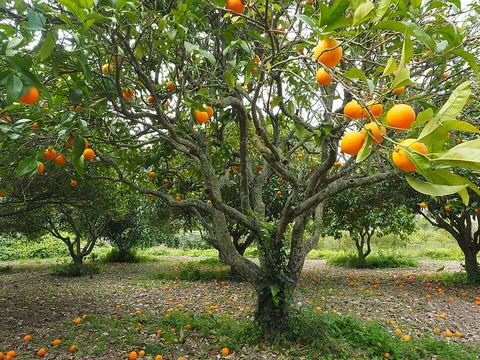
Sweet potato
A staple root vegetable native to South America.

Gogerr · CC BY-SA 4.0
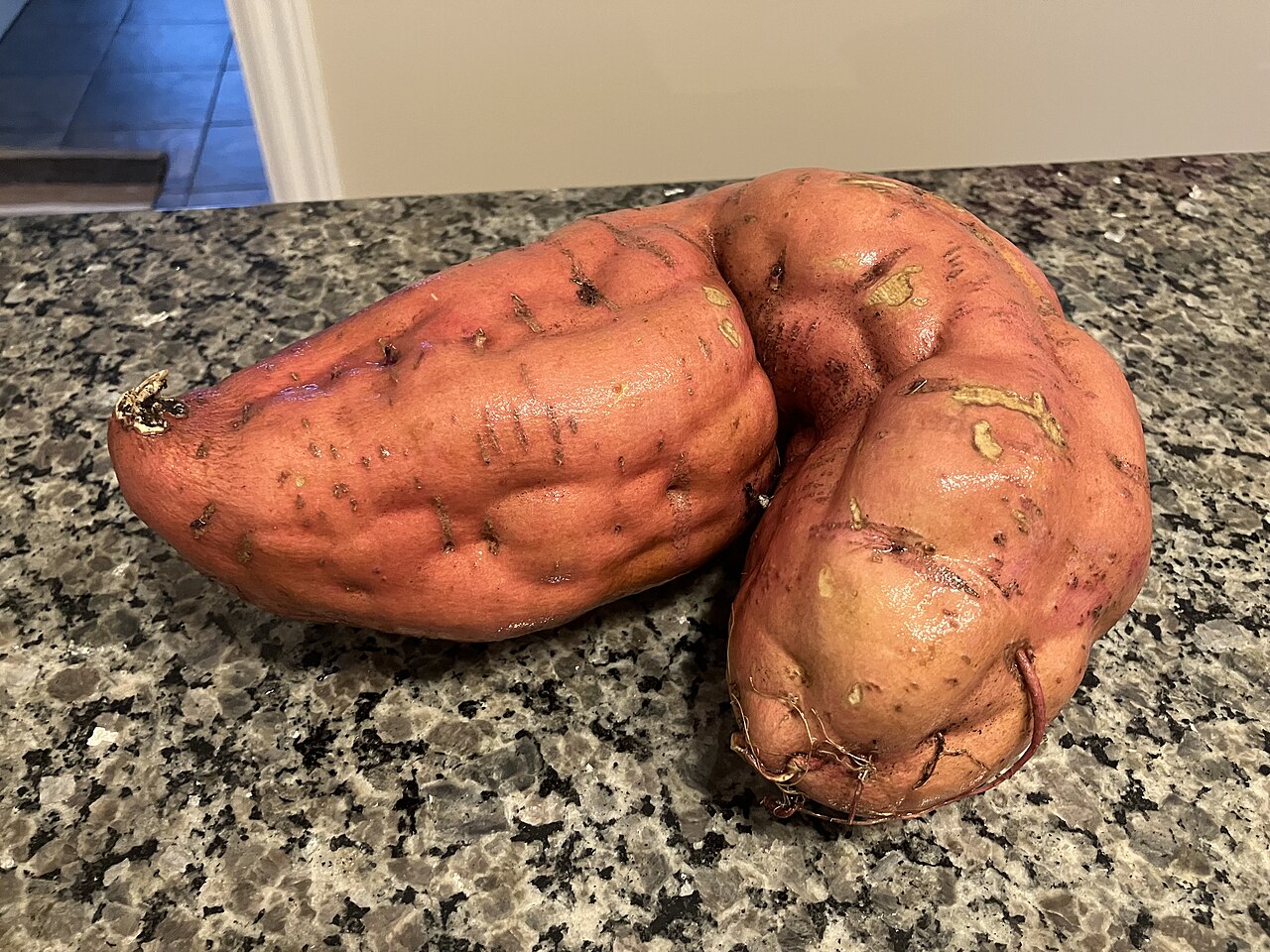
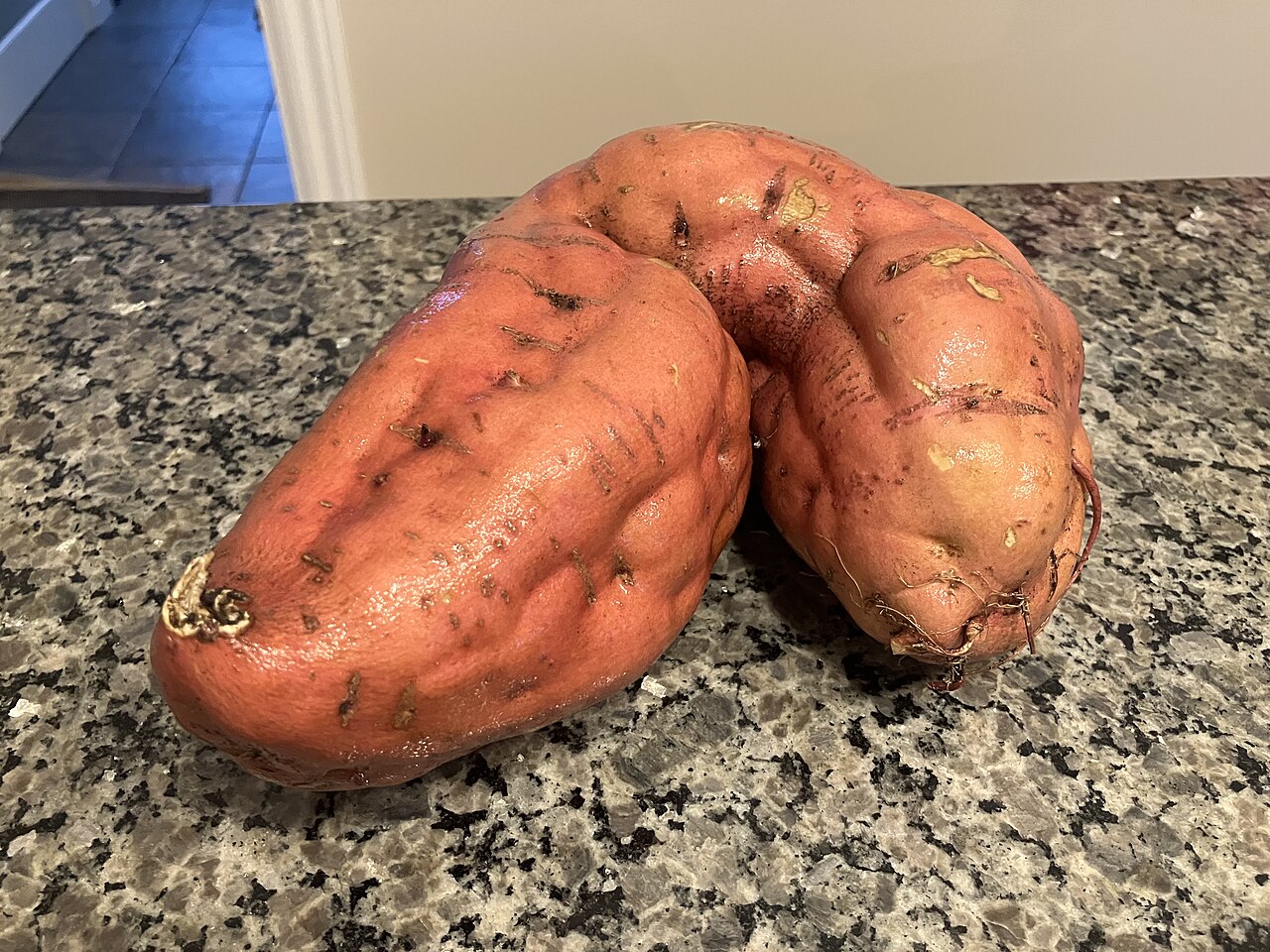
The sweet potato (Ipomoea batatas) is a dicotyledonous plant in the morning glory family, Convolvulaceae. Its large, starchy, sweet-tasting tuberous roots are used as a root vegetable and are a staple food in parts of the world. The plant is native to the tropical regions of South America in modern Ecuador and is one of the few crop plants of major importance among the approximately 50 genera and more than 1,000 species of Convolvulaceae—alongside water spinach (Ipomoea aquatica).
- Scientific name
- Ipomoea batatas
- Family
- Convolvulaceae
- Origin
- Tropical regions of South America (modern Ecuador)
- Type
- Herbaceous perennial vine
- Edible parts
- Tuberous roots, young shoots, and leaves
- Notable trait
- First known example of a naturally transgenic food crop
Lore & Background
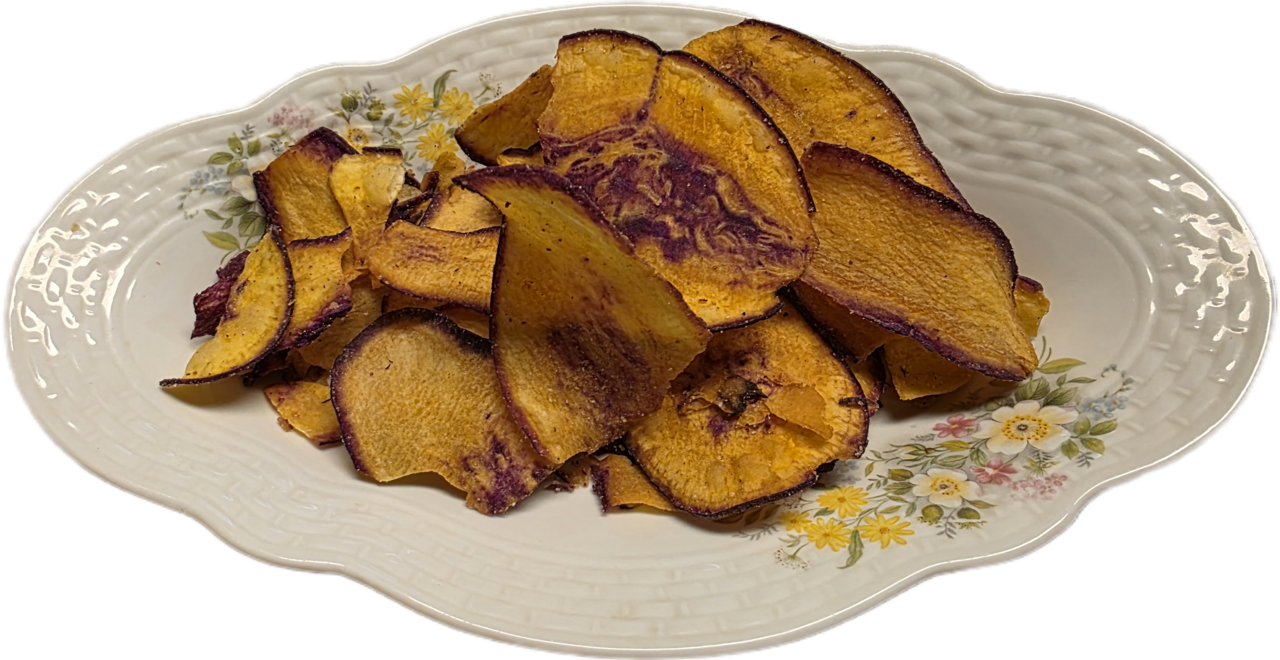
The sweet potato is a herbaceous perennial vine with alternate triangle-shaped or palmately lobed leaves and medium-sized sympetalous flowers. Its stems crawl on the ground and form adventitious roots at the nodes. The tuberous root is long and tapered, with smooth skin ranging in color from yellow, orange, red, brown, purple, and beige, while the flesh varies from beige through white, red, pink, violet, yellow, orange, and purple. Cultivars with white or pale yellow flesh are less sweet and moist than those with red, pink, or orange flesh. The sweet potato originates in South America in present-day Ecuador, with domestication occurring only in South America (Peru-Ecuador region), not in Central America. In Central America, domesticated sweet potatoes were present at least 4,000 years ago. The genome of cultivated sweet potatoes contains sequences of DNA from Agrobacterium, with genes actively expressed, making it the first known naturally transgenic food crop. Before European arrival, sweet potato was grown in Polynesia, spread by vine cuttings. A common hypothesis is that Polynesians brought cuttings from South America. Some have noted similarities between words for sweet potato in Polynesian languages and South American languages like Quechua and Aymara, but mainstream linguistic evidence does not confirm a direct shared cognate, so this remains a debated point rather than established fact.
Reader's Guide
The sweet potato is significant as a staple food in many parts of the world, providing a starchy, sweet-tasting tuberous root that is cultivated in numerous varieties with diverse skin and flesh colors. Its domestication history spans at least 5,000 years in Central America, with evidence of pre-Columbian dispersal to Polynesia, likely via human contact between South America and the Pacific islands. The plant's genome contains natural transgenes from Agrobacterium, making it a unique example of a naturally transgenic crop, which has implications for understanding plant evolution and domestication. The sweet potato's introduction to Europe, Asia, and the Pacific through the Columbian exchange and subsequent colonial networks helped establish it as a global crop, particularly important in preventing famines in regions like Japan and Korea. Its taxonomic distinction from the common potato and true yams is often confused in North America, where darker sweet potatoes are called yams, but botanically they are distant relatives. The sweet potato's role in early transoceanic contact and its genetic legacy continue to be subjects of research and scholarly debate.
Did You Know?
- The sweet potato is one of the few crop plants of major importance among the approximately 50 genera and more than 1,000 species of Convolvulaceae—alongside water spinach (Ipomoea aquatica).
- The genome of cultivated sweet potatoes contains sequences of DNA from Agrobacterium, making it the first known example of a naturally transgenic food crop.
- Similarities between words for sweet potato in Polynesian and South American languages have been noted, but mainstream linguistic evidence does not confirm a direct shared cognate.
Gallery

Frequently Asked Questions
What is the sweet potato?
The sweet potato (Ipomoea batatas) is a herbaceous perennial vine grown for its large, starchy, sweet-tasting tuberous roots. It serves as a staple root vegetable across many tropical regions of the world.
Where does the sweet potato originate from?
The sweet potato is native to the tropical lowlands of South America, specifically in the area of modern-day Ecuador.
What parts of the sweet potato plant are edible?
The tuberous roots are the primary food source, but the young shoots and leaves are also harvested and eaten.
What plant family does the sweet potato belong to?
It is classified in Convolvulaceae, the morning glory family, and stands out as one of the very few major crop plants among that family's roughly 50 genera and over 1,000 species.
What makes the sweet potato notable among crops?
It is recognized as the first known example of a naturally transgenic food crop, a distinction that sets it apart in agricultural history.
More in Plants & Crops 1-17
Spotted an error? Know more?
This is a living reference — every entry is fact-audited, and reader corrections feed straight into our audit queue. Suggest an edit · See this site's audit record