Tagetes
Genus of 50 marigold species native to the Americas.

Sabina Bajracharya · CC BY-SA 4.0
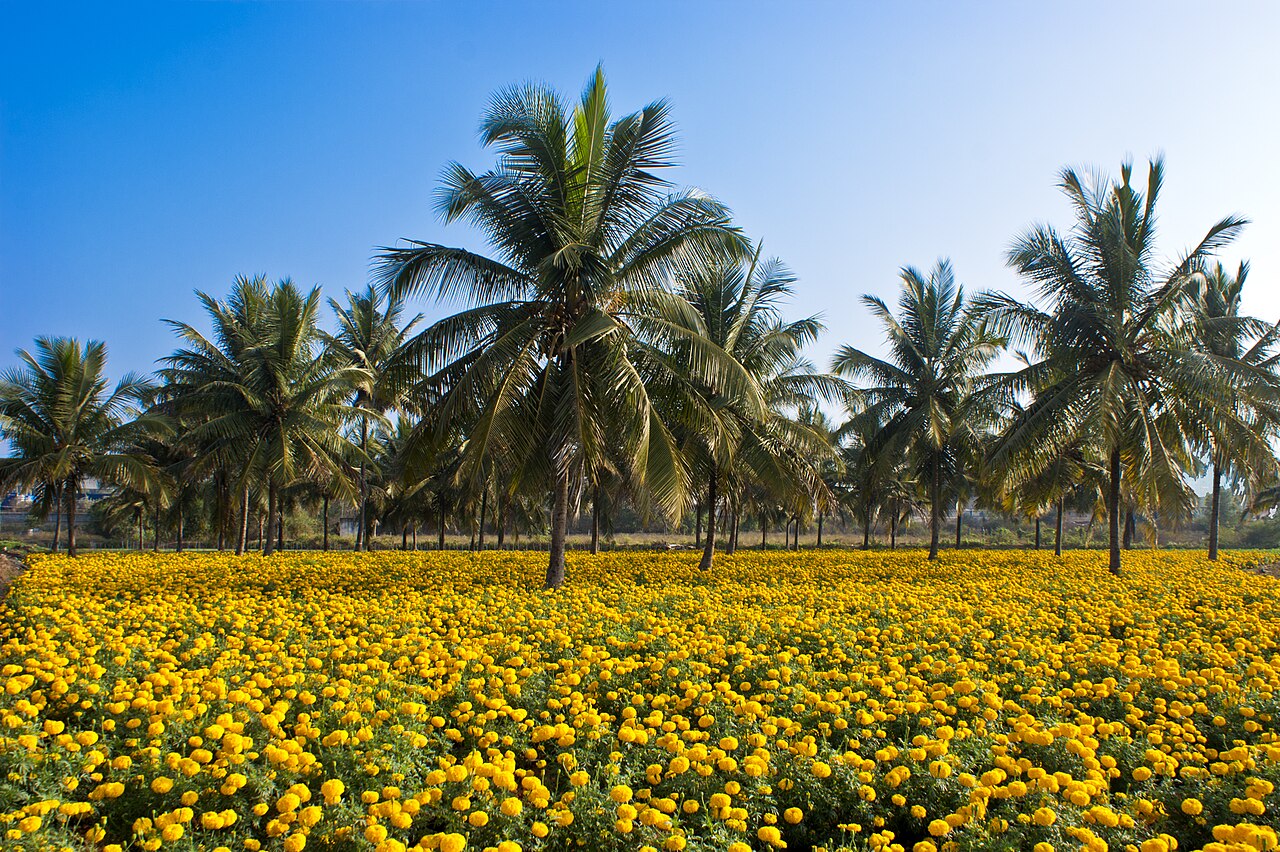
Tagetes is a genus of 50 species of annual or perennial, mostly herbaceous plants in the family Asteraceae, known in English as marigolds. Native to Central and Southern Mexico and several other Latin American countries, these plants were originally called cempōhualxōchitl by the Nahua people.
- Genus
- Tagetes
- Number of species
- 50
- Family
- Asteraceae
- Native region
- Central and Southern Mexico and other Latin American countries
- Common name
- Marigold
- Named by
- Carl Linnaeus
Lore & Background
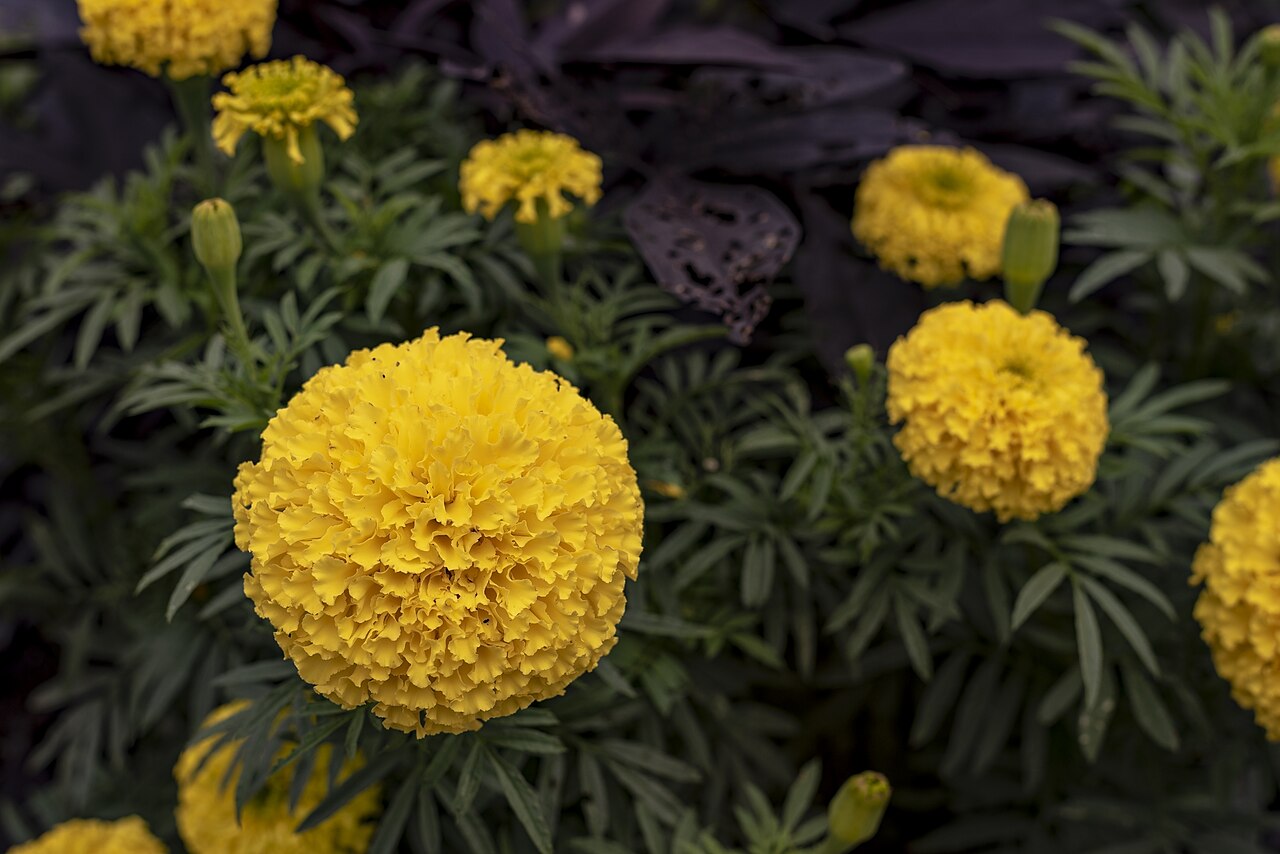
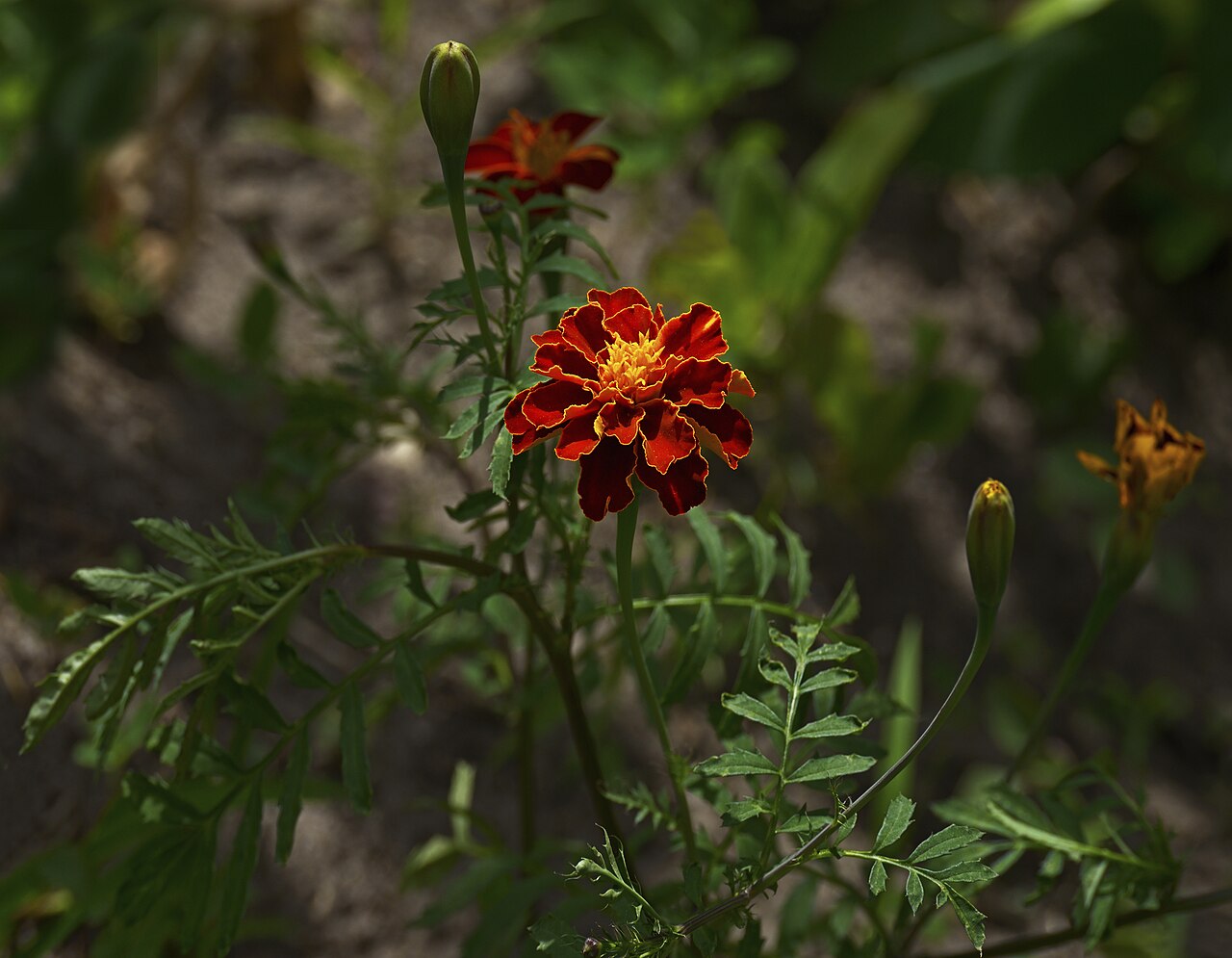
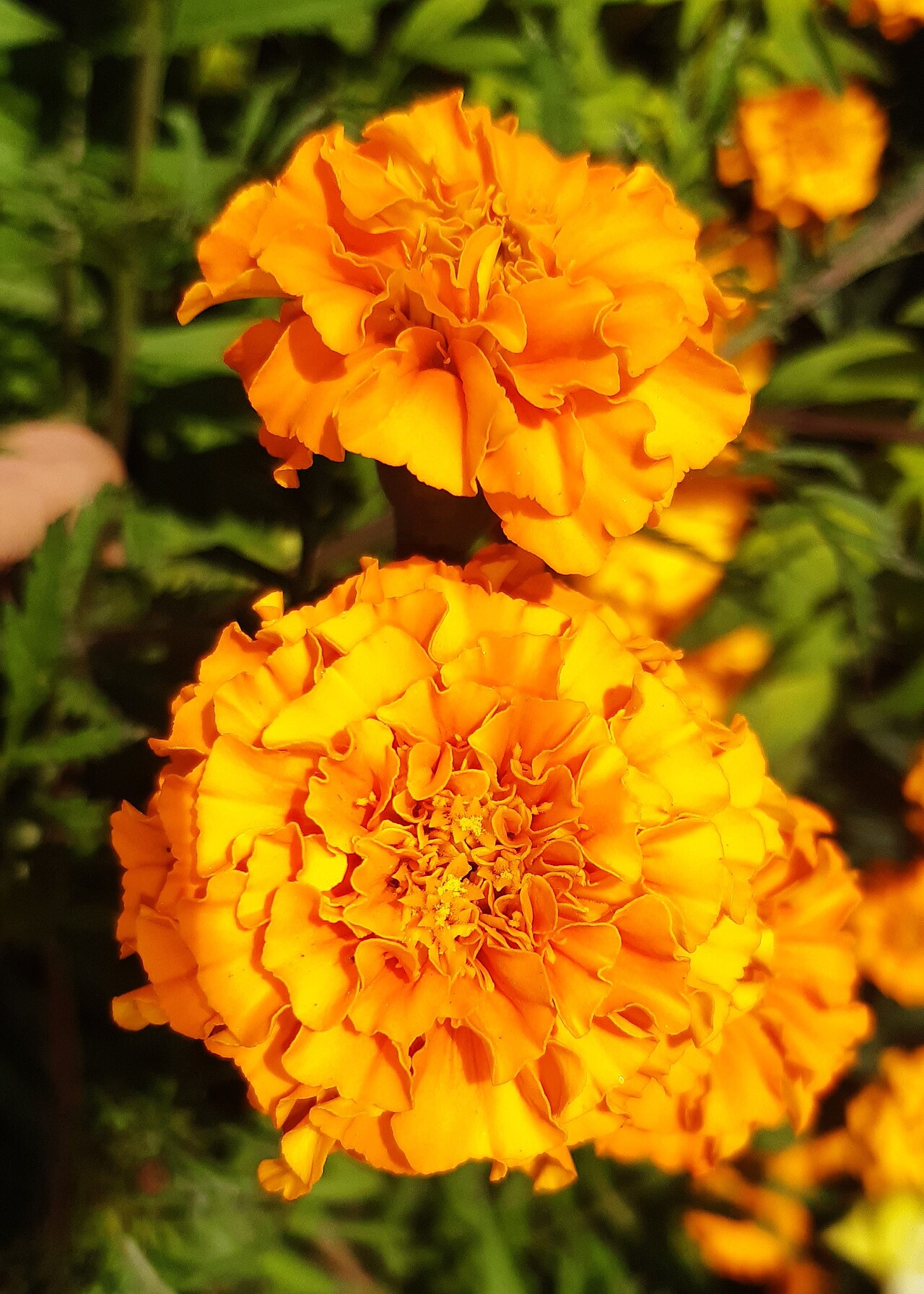
The Latin name Tagetes derives from Tages in Etruscan mythology, born from plowing the earth, likely referring to the ease with which plants regrow each year. The common English name 'marigold' comes from 'Mary's gold' in honor of the Virgin Mary, first applied to a similar European plant, Calendula officinalis. The most commonly cultivated varieties include African marigolds (Tagetes erecta hybrids), French marigolds (Tagetes patula hybrids, so named in English rather than indicating origin in France), and signet marigolds (hybrids of Tagetes tenuifolia).
Reader's Guide
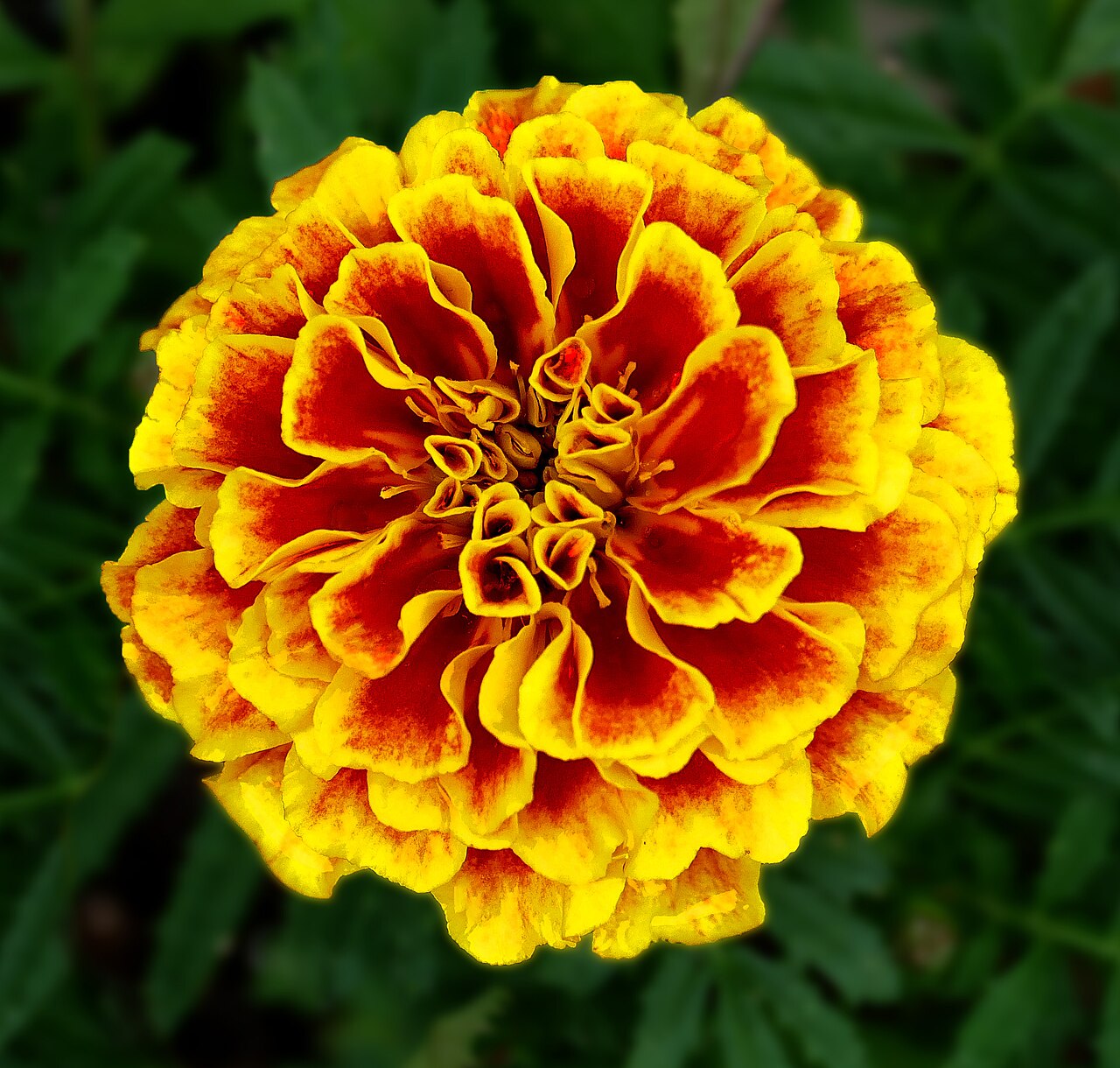
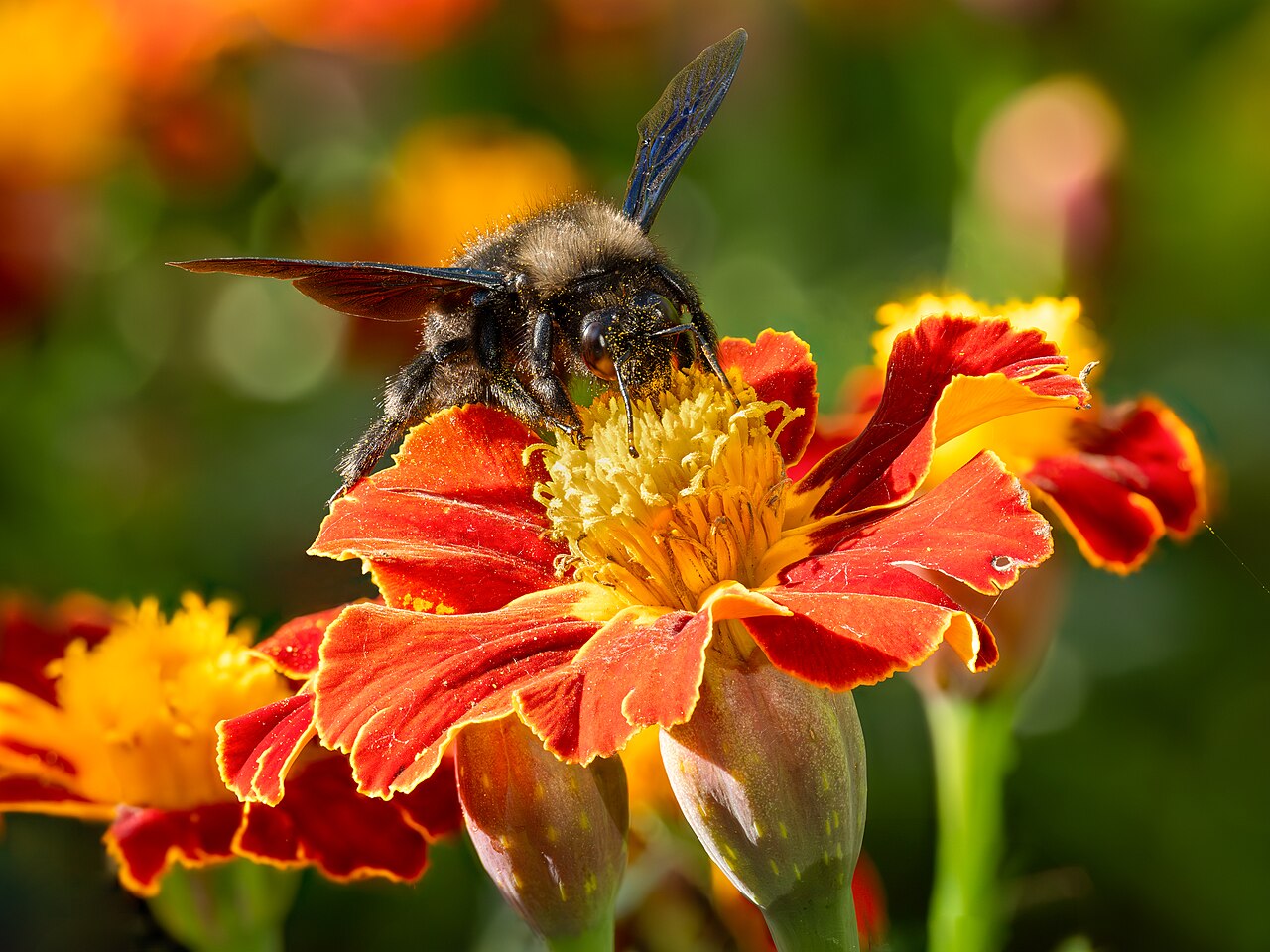
Tagetes species vary in size from 0.1 to 2.2 m tall, with pinnate green leaves and flower heads in golden, orange, yellow, and white colors, often with maroon highlights. They have a fibrous root system and grow well in almost any soil, with most horticultural selections preferring good drainage and some cultivars tolerating drought. The roots exude antibacterial thiophenes, so they should not be planted near legume crops. Some perennial species are resistant to deer, rabbits, rodents, and javelina or peccary. Tagetes minuta is used for essential oil in perfume and as a flavorant in food and tobacco, and is cultivated in South Africa for land reclamation. The florets of Tagetes erecta are rich in lutein and used as a food color in the European Union, but only approved for animal feed in the United States. Marigolds are food plants for some Lepidoptera caterpillars and nectar sources for butterflies and bumblebees, and are often pollinated by beetles in the wild. Tagetes lucida is used in Mexico for a medicinal tea and as a culinary herb substitute for tarragon. Tagetes minuta is used as a culinary herb in Peru, Ecuador, Chile, and Bolivia, and as a medicinal tea for gastrointestinal complaints and against nematodes. Tagetes erecta is widely used in Day of the Dead celebrations in Mexico. In South Asia, marigolds are used for ornamentation in weddings and festivals, and in Ukraine, they are regarded as a national symbol.
Did You Know?
- Tagetes species are native to Central and Southern Mexico and several other Latin American countries.
- The common name 'marigold' derives from 'Mary's gold' in honor of the Virgin Mary.
- Tagetes minuta is used as a source of essential oil for the perfume industry and as a flavorant in food and tobacco.
Gallery
Frequently Asked Questions
Who is Tagetes?
Tagetes is a genus of roughly 50 species of mostly herbaceous plants, widely known as marigolds, that belong to the Asteraceae family. Depending on the species, they grow as either annuals or perennials.
What are Tagetes's powers/role?
Tagetes species are celebrated for their densely packed, vividly colored flower heads and strongly aromatic foliage, making them a go-to choice for ornamental borders, cut arrangements, and traditional ceremonies. Their bold appearance and pungent scent set them apart in the garden.
Why is Tagetes important?
These plants carry deep cultural weight in Mesoamerica, where the Nahua people originally called them cempōhualxōchitl. Their long history in indigenous traditions combined with their global popularity as garden staples makes them one of the most recognizable cultivated plants in the world.
Where is Tagetes from?
Tagetes species are native to Central and Southern Mexico along with several other Latin American countries. That region remains their primary natural habitat, even though they have since been grown on every continent.
More in Plants & Crops 1-17
Spotted an error? Know more?
This is a living reference — every entry is fact-audited, and reader corrections feed straight into our audit queue. Suggest an edit · See this site's audit record