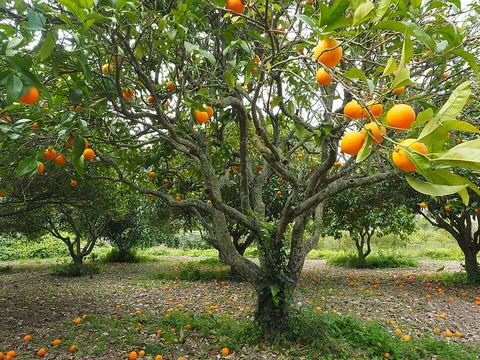
Tamarind
A versatile tropical tree with sweet-sour fruit.

Flocci Nivis · CC BY 4.0
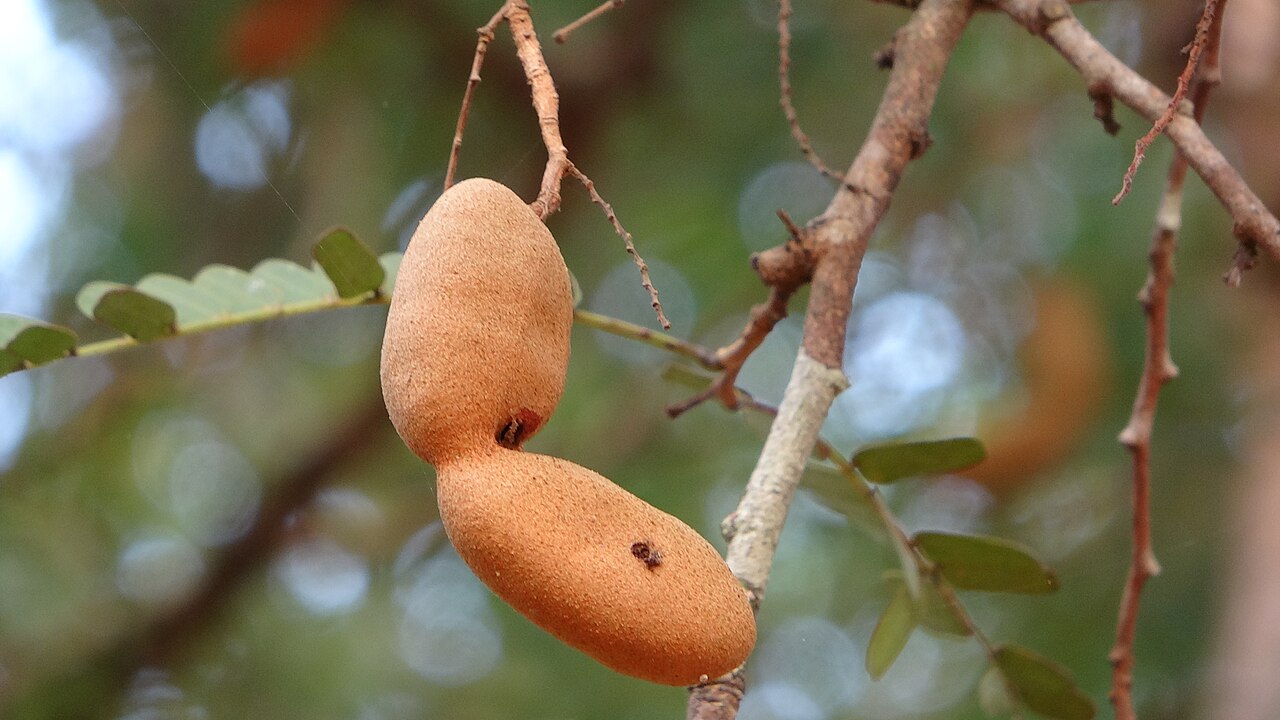
Tamarind (Tamarindus indica) is a leguminous tree bearing edible fruit that is indigenous to tropical Africa and naturalized in Asia. It is the only species in the genus Tamarindus and belongs to the family Fabaceae. The tree produces brown, pod-like fruits containing a sweet, tangy pulp used in cuisines worldwide, as well as in traditional medicine and as a dye. Its wood is used for woodworking, seed oil is extracted from the seeds, and young leaves are used in Indian and Filipino cuisine. Because of its multiple uses, tamarind is cultivated worldwide in tropical and subtropical zones.
- max_height
- 12–18 metres (39–59 feet), up to 24 metres (79 feet) in ideal conditions
- genome_size
- Approximately 1.2–1.3 Gb
Lore & Background
The tamarind is a long-living, medium-growth tree that attains a typical height of 12–18 metres, with an irregular, vase-shaped crown up to 12 metres wide. Its trunk may grow to a circumference of 7.5 metres. The tree grows well in full sun and prefers clay, loam, sandy, and acidic soil types, with high resistance to drought and wind-borne salt. Its evergreen leaves are alternately arranged and paripinnately compound, with bright green leaflets less than 15 centimetres long. The branches droop from a single central trunk as the tree matures and are often pruned in agriculture. As a tropical species, it is frost-sensitive. The flowers bloom inconspicuously, with small, pale yellow petals that are obovate to spatulate and often marked with red or pink streaks; they are 1–2 cm wide, five-petalled, and borne in small racemes. Each flower is covered in a bud by four sepals that are often yellowish with red streaks, which are lost when the flower blooms.
Reader's Guide
Tamarind holds significance as a multipurpose tree with deep historical roots in Africa, Asia, and beyond. Indigenous to tropical Africa, it was likely transported to South Asia several thousand years ago and later introduced to Mexico and Central America in the 16th century by Spanish and Portuguese colonists, becoming a staple in regional cuisine. Its fruit pulp is used in chutneys, curries, sauces, and beverages across many cultures, including the traditional sharbat syrup drink and the Ramadan beverage 'tamr-hindi' in the Levant. The pulp also serves as a pickling agent and a means of making certain poisonous yams safe for consumption in Ghana. Tamarind has been integrated into Jewish cuisine across several diasporas, with Syrian Jews preparing tamarind syrup for dishes like stuffed grape leaves and sweet-sour meatballs. In the Philippines, the fruit is used in sinigang and sinampalukan soups, and the pulp is cooked into candy. The seeds, after soaking and boiling, are used in jellies, marmalades, and as a stabilizer for cheese, ice cream, and mayonnaise. In Thailand, roasted seeds serve as a coffee alternative. The leaves and bark are also edible. Nutritionally, raw tamarind is rich in thiamine, magnesium, and potassium.
Did You Know?
- Tamarind seeds contain pectin and are used as a stabilizer in cheese, ice cream, and mayonnaise.
- In Madagascar, tamarind fruit and leaves are a seasonally important food source for ring-tailed lemurs, though they do not consistently provide up to 50 percent of their annual diet.
- The name 'tamarind' derives from Arabic 'tamr hindi', meaning 'Indian date'.
Gallery
Frequently Asked Questions
Who is Tamarind?
Tamarind (Tamarindus indica) is a single-species leguminous tree native to tropical Africa that has since become naturalized across Asia. It sits in the Fabaceae family and is the sole member of the genus Tamarindus.
What are Tamarind's powers/role?
The tree yields brown, pod-shaped fruits whose sweet-tangy pulp appears in cuisines worldwide, while its young leaves star in Indian and Filipino dishes. Beyond the kitchen, the wood serves woodworking, the seeds are pressed for oil, and the fruit doubles as a traditional medicine and natural dye.
How big does Tamarind get?
A mature Tamarind typically stands 12 to 18 metres (about 39–59 feet) tall, though exceptional specimens in ideal conditions can reach roughly 24 metres (79 feet). Its genome spans approximately 1.2–1.3 gigabases.
Where does Tamarind come from?
Tamarind originated in tropical Africa and was later naturalized throughout Asian tropics. Its many practical uses have since driven cultivation across every tropical and subtropical zone on the planet.
Why is Tamarind important?
Nearly every part of the tree is put to work—edible pulp, cooking leaves, timber, seed oil, medicine, and dye—making it a cornerstone of tropical agriculture. This extraordinary versatility is what keeps it planted and valued on every continent where the climate allows.
More in Plants & Crops 1-17
Spotted an error? Know more?
This is a living reference — every entry is fact-audited, and reader corrections feed straight into our audit queue. Suggest an edit · See this site's audit record