Turnip
A versatile root vegetable with ancient origins and global cultivation.

Eric Polk · CC BY-SA 4.0
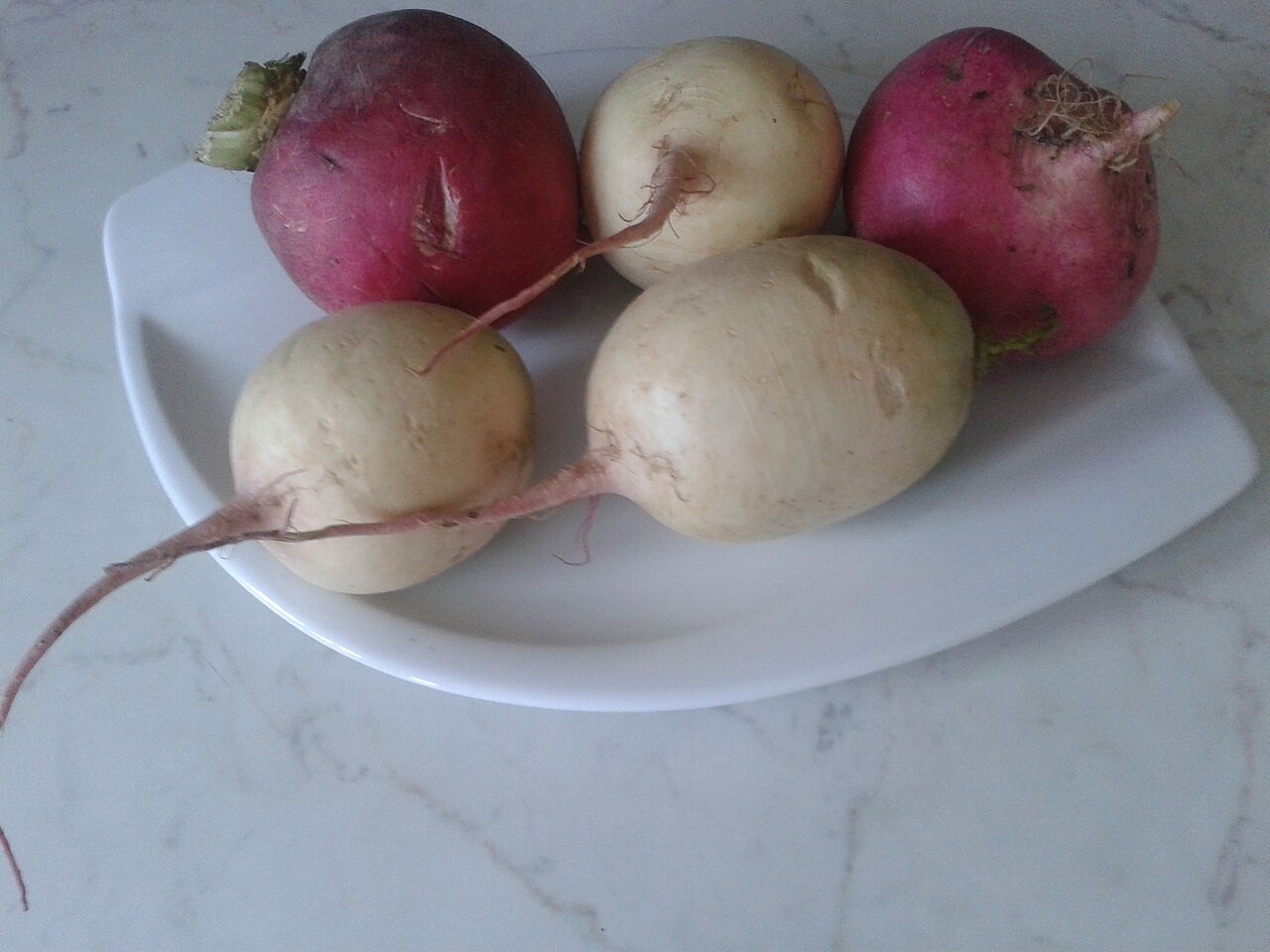
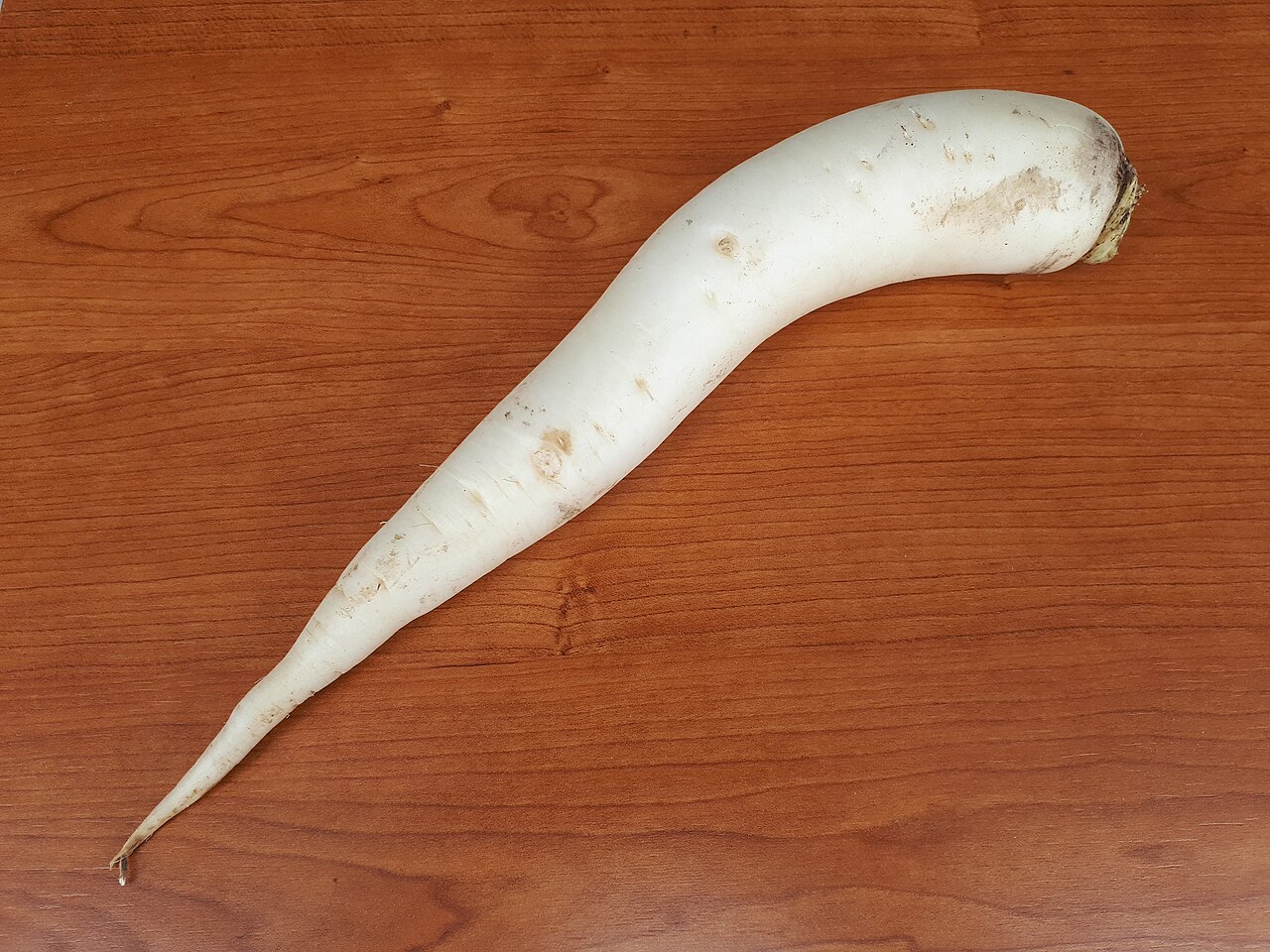
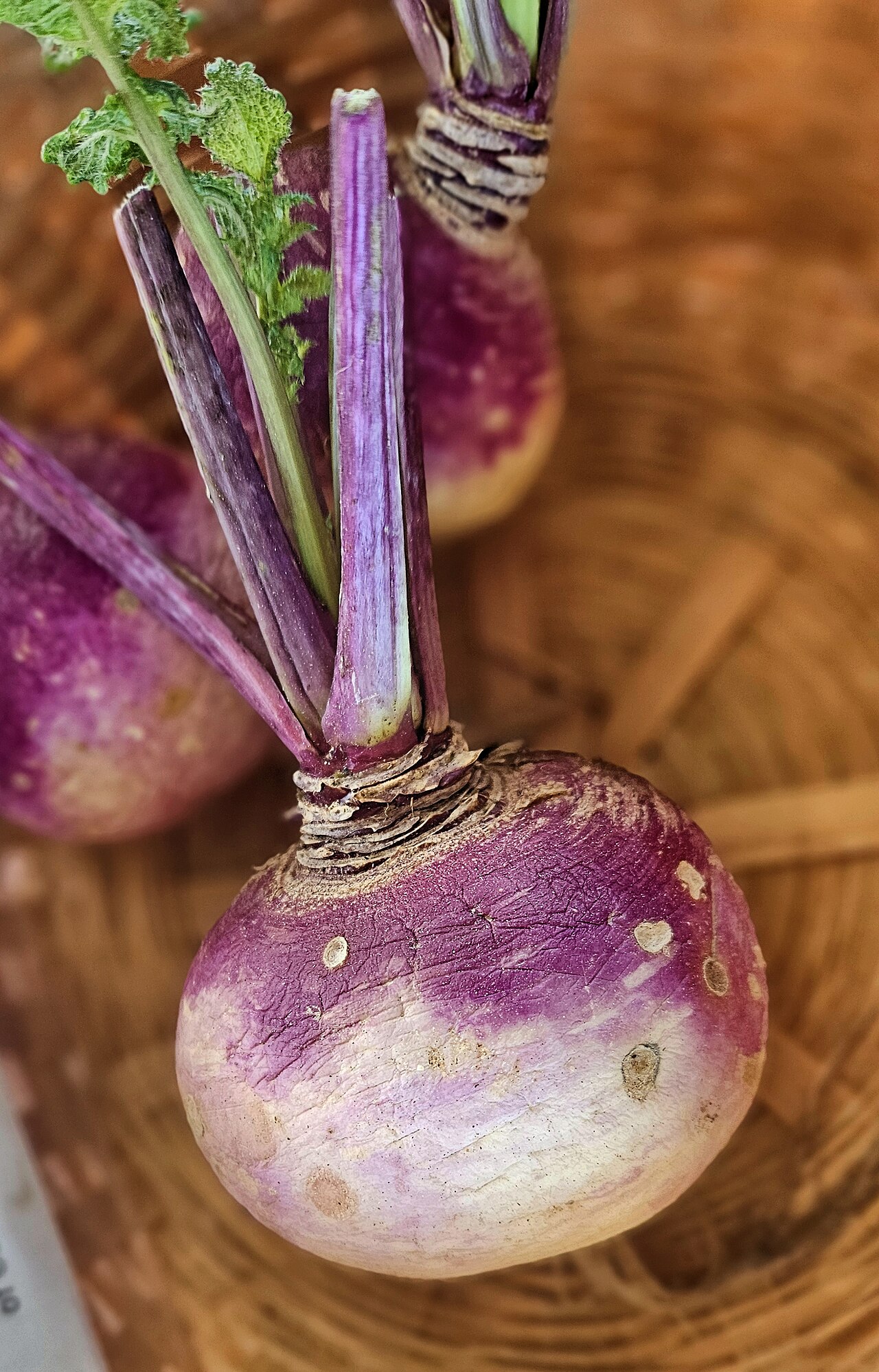
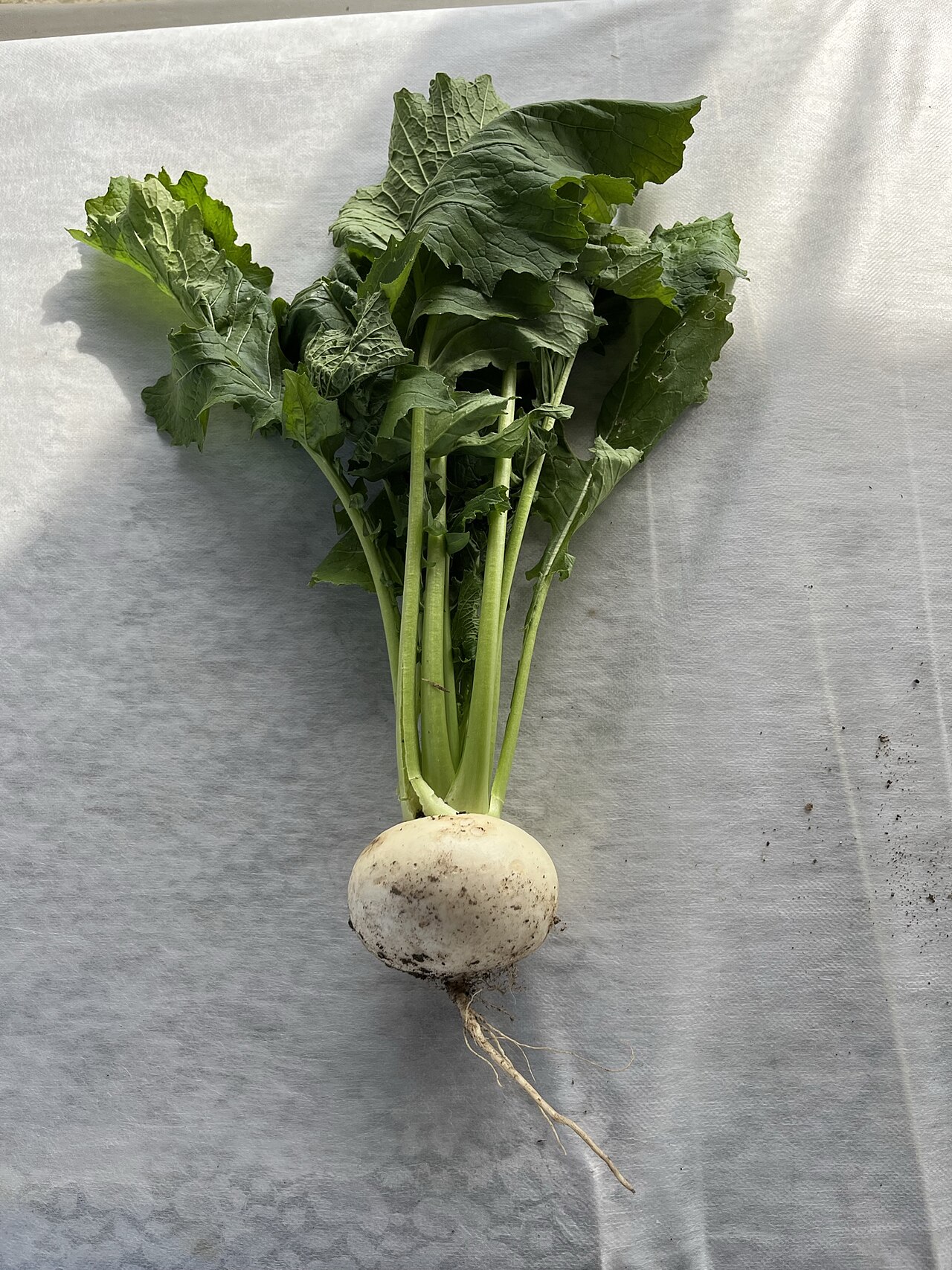
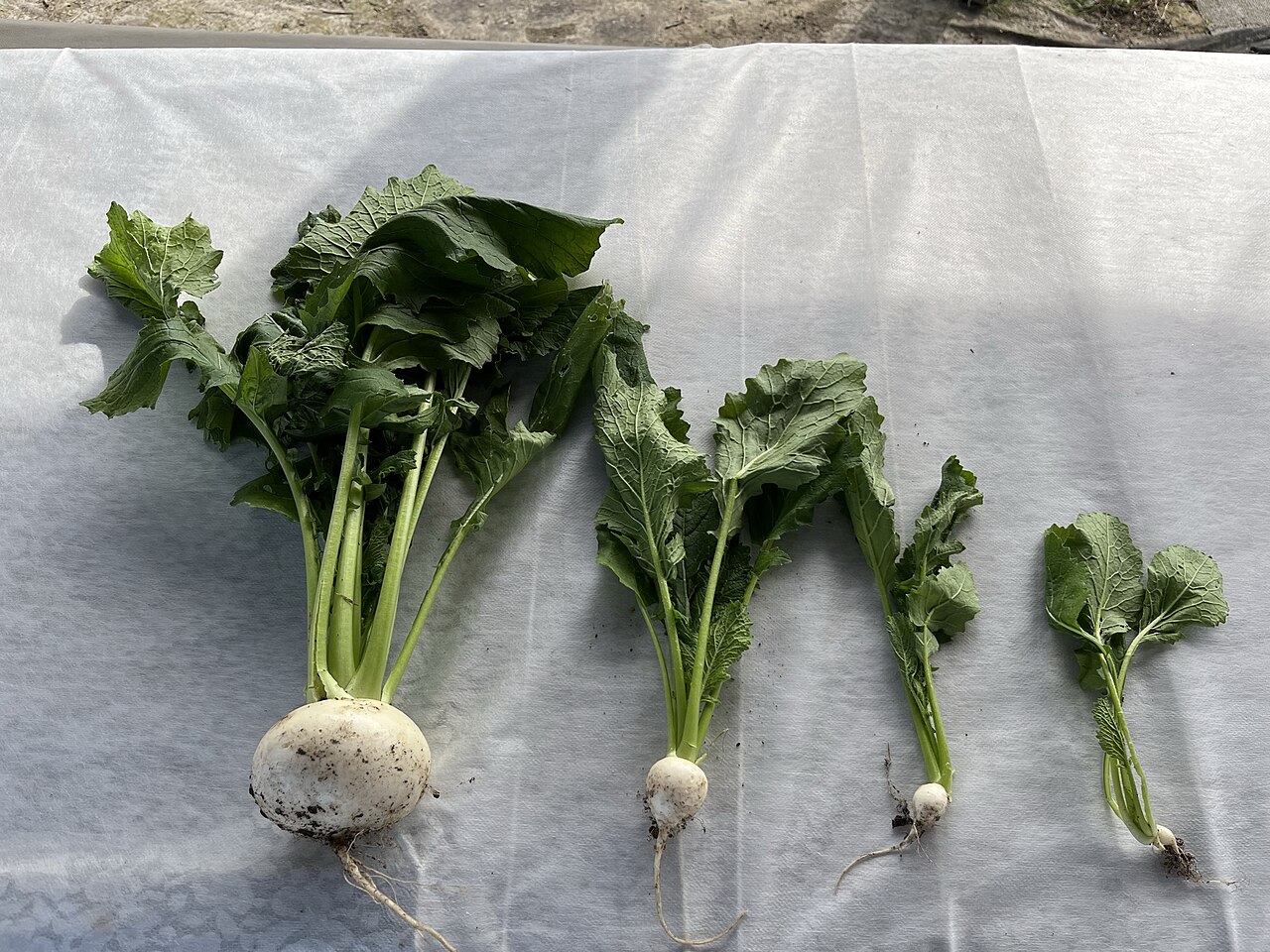
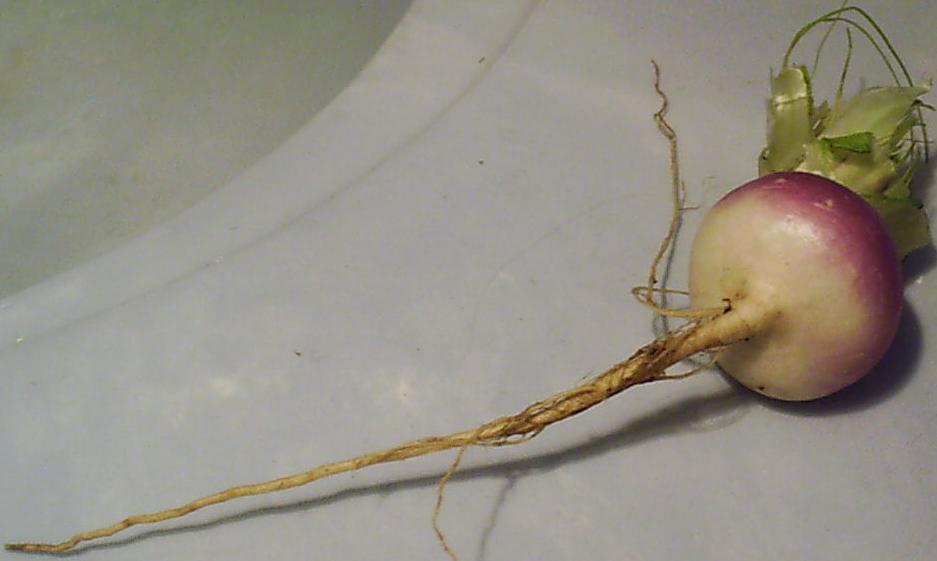
The turnip (Brassica rapa subsp. rapa) is a root vegetable grown in temperate climates worldwide for its white, fleshy taproot. Small, tender varieties are cultivated for human consumption, while larger ones are used as livestock feed. The name 'turnip' is also sometimes applied to the related swede or rutabaga.
- Scientific name
- Brassica rapa subsp. rapa
- Type
- Root vegetable
- Domestication origin
- Central Asia, several thousand years ago
- Notable for
- Four-year crop rotation; food for poor in antiquity; heraldic charge
Lore & Background
Wild forms of the turnip and its relatives are found across western Asia and Europe. Edible turnips were domesticated in Central Asia several thousand years ago, supported by genetic studies showing Central Asian varieties are the most genetically diverse. The turnip later spread to Europe and East Asia, becoming an important food in the Hellenistic and Roman world. In the Austrian region of Wildschönau, farmers produce a schnaps called Krautinger from a variation of Brassica rapa subsp. rapa, permitted under Empress Maria Theresia in the 18th century. The turnip is also an old vegetable charge in heraldry, used by Leonhard von Keutschach, prince-archbishop of Salzburg. Turnips were an important crop in Antebellum America, grown for both greens and roots. They could be planted as late as fall and still provide food for newly arrived settlers. The typical southern way of cooking turnip greens was to boil them with salt pork, and the broth, known as pot likker, was served with crumbled corn pone.
Reader's Guide
The turnip's significance lies in its long history as a staple food, its role in agricultural innovation, and its cultural symbolism. Domesticated in Central Asia thousands of years ago, it spread across Europe and Asia, becoming a key crop in ancient and medieval economies. In the 18th century, Charles Townshend's promotion of turnips in a four-year crop rotation revolutionized English agriculture by allowing year-round livestock feeding, improving soil fertility and farm productivity. The turnip also appears in heraldry and folklore, notably as a symbol of poverty in Jewish antiquity and as the basis for a distinctive Austrian schnaps. Nutritionally, turnip greens are rich in vitamin K, vitamin A, and vitamin C, while the root provides moderate vitamin C. Modern cultivation adapts to climate challenges; agrivoltaic shielding with partially-transparent solar panels can mitigate heat stress and increase yields. The turnip remains a versatile crop, grown for both its root and leaves, and continues to be a subject of genetic and historical study.
Did You Know?
- The word 'turnip' may derive from 'turn' (as in rounded on a lathe) and 'neep', from Latin 'napus'.
- Turnip roots weigh up to 1 kilogram, but are usually harvested when smaller.
- In the Austrian region of Wildschönau, farmers produce a schnaps called Krautinger from a turnip variety, permitted under Empress Maria Theresia in the 18th century.
Gallery
Frequently Asked Questions
What is a turnip?
A turnip is a root vegetable in the species Brassica rapa subsp. rapa, grown across temperate regions worldwide for its fleshy white taproot. Smaller, tender cultivars are typically eaten by people, while larger ones are fed to livestock.
Where and when were turnips first domesticated?
Turnips were first domesticated in Central Asia several thousand years ago. They have since been cultivated in virtually every temperate climate on the planet.
What is the scientific name of a turnip?
Its full taxonomic name is Brassica rapa subsp. rapa, placing it squarely in the brassica family. The name 'turnip' is also sometimes used loosely for the related swede or rutabaga.
Who is credited with popularizing turnip farming in England?
Charles 'Turnip' Townshend, an early-1700s English politician, championed the turnip as a cornerstone of a four-year crop rotation system. His advocacy helped improve soil fertility and cut down on fallow land across English agriculture.
Why are turnips considered historically and culturally significant?
In antiquity they served as a staple food for the poor, and they still appear as a heraldic charge on various coats of arms. Their hardiness and versatility make them one of the most widely grown root vegetables globally.
More in Plants & Crops 1-17
Spotted an error? Know more?
This is a living reference — every entry is fact-audited, and reader corrections feed straight into our audit queue. Suggest an edit · See this site's audit record